

The short answer, before I explain how I got to it. The Anker 10,000mAh power bank with the built-in USB-C cable is the one I carry in my jacket. A plain pack from INIU is the one that lives in the glove box of the CR-V as a spare. Both will refill a flat phone. Neither is a bad buy. The real difference is what you have to remember in the ninety seconds before your phone dies, and whether the thing in your bag already has everything it needs to do the job.
Last April I stood in the church parking lot on a Sunday morning with my phone at four percent and Carol already in the car with the engine running. I had a power bank in the console. What I did not have was a cable, because the cable had wandered off somewhere in the house, the way they do. I dug through that console for a good minute and a half. I came up with a tire gauge, two pens that did not write, and a folded bulletin left over from Easter. No cable. So I did what a man does in that situation. I put the phone in my pocket, drove home, and said nothing about it for the rest of the day. Carol asked once why I was quiet and I told her I was thinking about the gutters. That evening I sat at the kitchen table with the laptop and ordered the Anker. Not because the INIU had failed. It had done exactly what it was built to do. It had simply done nothing at all, because the one piece it needed was three miles away on a kitchen counter. Everything below is detail around that one fact.
| Anker 10,000mAh | INIU Power Bank | |
|---|---|---|
| Charging speed | Anker rates it at 30W, which they say is twice as fast as a plain 5V/3A charger. | Slower. You notice it on a big phone with a low battery. |
| The cable | A 5.4-inch USB-C cable built into the body and rated for more than 10,000 bends. | No cable in the box. You bring your own, which means you can also forget your own. |
| Two devices at once | One USB-C port and one USB-A port in addition to the built-in cable, so two people can charge together. | Fewer ways in at the same time. |
| Bulk in a pocket | 223 grams, and the folded cable makes it a thicker thing to carry. | A flat slab with nothing hanging off it. Slides into a jeans pocket and disappears. |
| What it costs | More up front. You are paying for the cable and the name on the side. | Less. This is where INIU earns its place. |
| Support if it quits | An 18-month warranty and a company you can actually reach. | Thinner. If it dies in year two, you buy another one. |
| Best for | The pack you carry every day and never think about. | The spare that lives in the car and gets forgotten. |
Where Anker Wins
The built-in cable is the headline, and it is worth more than it sounds. Anker puts a 5.4-inch USB-C cable right into the body of the thing and rates it for more than 10,000 bends. I am not going to pretend I counted. What I can tell you is that a loose cable in a jacket pocket takes a beating. A cable attached to the battery cannot be left at home, cannot be borrowed by a grandkid and forgotten, and cannot end up behind the couch cushion where cables go to retire. It also cannot be borrowed and returned with the end chewed or bent, which has happened to two of mine in this house and I still do not know who to blame.
Speed is the second thing. Anker rates the output at 30W, twice as fast as a plain 5V/3A charger by their own numbers. In practice my iPhone goes from nearly dead to comfortably full in about the length of a church service and a stop at the grocery store. Anker says this pack delivers up to two full charges for an iPhone 15, two for an iPhone 14 Pro, and just under two for a Samsung S24. For the iPad I read on and video-call the grandkids with, it is a top-up rather than a full refill, and that has been true of every pack this size I have tried. I tested that one Sunday in June, plugging the iPad in at forty percent and letting it sit through a ballgame. It came out around eighty. That is a top-up, not a rescue, and I would rather tell you that than let you find it out on a long trip.
Then there are the small things that add up. One USB-C port and one USB-A port alongside the built-in cable, so Carol can plug her phone into the USB-A while mine sits on the attached cable. That sounds like a feature on a box. It is not, the first time you are both in the car and both under twenty percent. A 223 gram body that rides in a jacket pocket without pulling it down on one side. An 18-month warranty, which is the sort of thing you only think about the week after it expires, but it is there. And roughly 15,978 reviews averaging 4.5 stars, which I mention only because a product with that many reviews has been handled by people far harder on things than I am.
Where INIU Wins
I am not going to spend four hundred words explaining how the thing I bought is better in every possible way. Nobody believes that, and it is not true. The INIU wins two things outright, and one of them matters more than people admit.
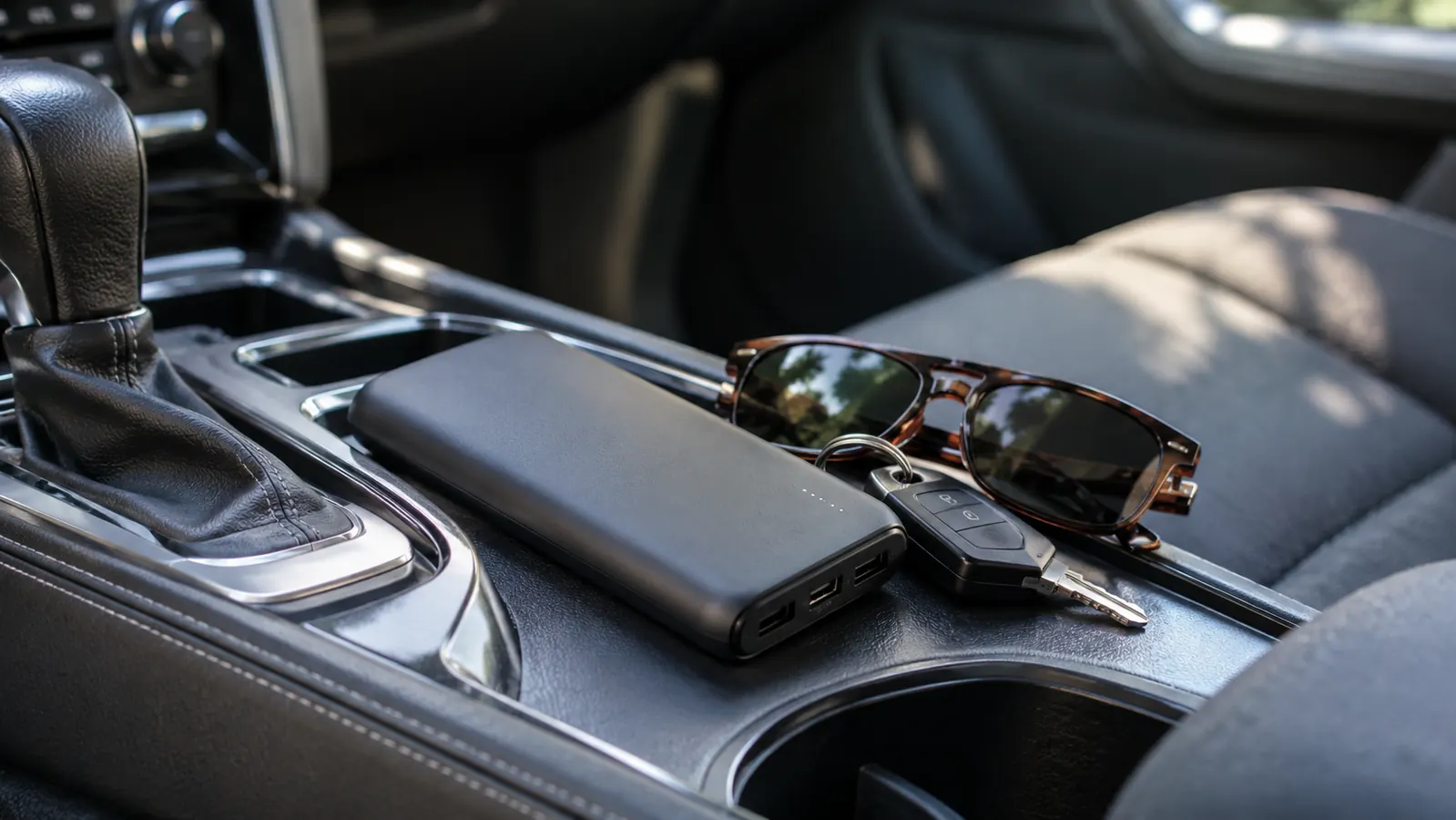
The first is shape. A plain power bank is a slab. Nothing hangs off it, there is no cable to fray or get caught on the edge of a pocket, and nothing makes the whole object twice as thick in your hand. If the way you carry a battery is to slide it into the front pocket of a pair of jeans and forget it until you need it, the slab is the better object. The Anker, with its cable folded along the side, is simply more thing to carry. I noticed it the first week, walking the dog that a neighbor and I share on weekday mornings. My jacket hung a little heavier on the left, and I kept patting the pocket to make sure I had not lost something. You stop noticing after a month. But you do notice at first, and I would be lying to leave that out.
The second is what it costs. The INIU is the cheaper of the two, and by enough that it changes how you treat it. Mine has ridden in the glove box of the CR-V through two Columbus summers and one winter where the doors froze shut and I did not drive it for a week. The pack sat there through all of it. I do not fuss over it. If it gets scratched, who cares. If it walks off, I am not going to lose sleep over it. That is a real advantage, and it is the reason I kept mine instead of handing it to a neighbor when the Anker arrived. There is a third point that is harder to name. A spare that lives in the car does not need to be the good one. It needs to be there. The INIU is the one I hand to somebody else without a second thought.
The Pack That Already Has the Cable Attached
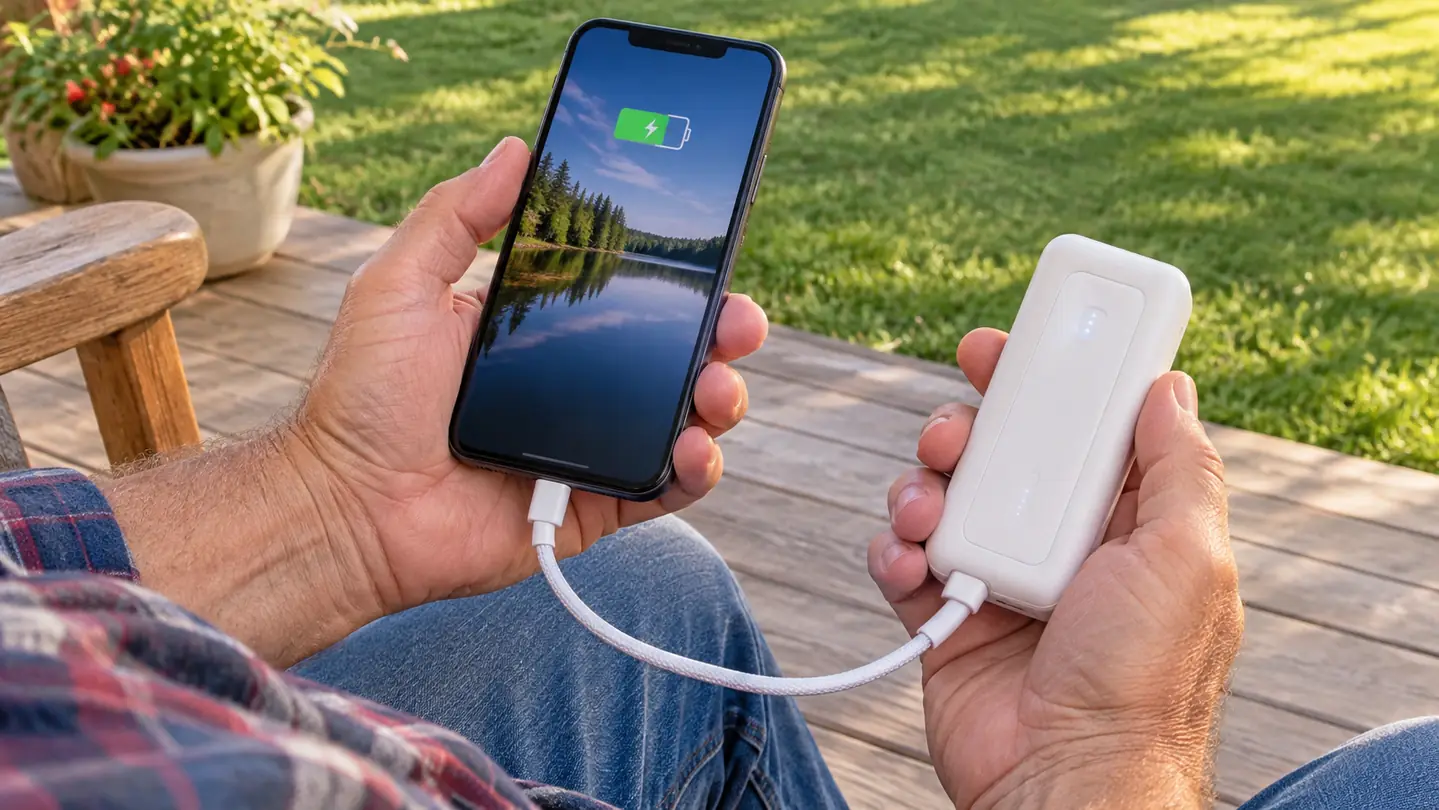
If that parking lot story sounded like your week, this is the fix. Anker builds the USB-C cable into the body, rates it for more than 10,000 bends, and backs the pack for 18 months. Mine has lived in my jacket since April and I have not had a dead phone yet.
Amazon Check Today's Price on Amazon →The Built-In Cable Is the Whole Argument
Here is why I keep circling back to the cable. Cables fail. Not the battery, not the plastic shell, the cable. It gets bent at the same spot a thousand times, the shielding gives at the connector, and one day it charges only when you hold it at an angle and not otherwise. I have thrown away more charging cables than I have thrown away batteries, and I have been carrying a phone since they came in a bag the size of a shoebox. The last one quit in the CR-V in a way I could not explain. It worked at the kitchen counter and not in the car, which made no sense until I realized I had been closing it in the console lid for two years and the strain had done its work.
Anker's answer is to make the cable part of the battery and test it to 10,000 bends. That is a manufacturer's claim and you should hold it loosely. The design idea behind it, though, is sound, and it solves the exact problem I had in that parking lot. The cable is 5.4 inches, which is short. It is meant to be short. A long attached cable flops around and pulls the phone off the table. Short means the phone and the battery ride together in your hand, which is what you actually do when you are walking across a lot with a grocery bag on the other arm. I have done precisely that on a Saturday at the Kroger on High Street, phone in my left hand, pack tucked under it, bag in my right. It works. Nobody designs that on purpose and it is the way people actually carry these things.
The battery was fine. The cable was in the house. That is the whole difference between a dead phone and a charged one.
What Neither One Fixes
A pack this size has a ceiling. It will not run a laptop for an afternoon and it will not carry a tablet through a long flight. What it will do is get a phone back to full, twice, with a little left over, and that covers every ordinary day I have had in the last ten years. If you need more than that, you are shopping for a different class of battery and neither of these is it.
And neither one solves the actual failure, which is that the power bank itself runs down while it sits there and you never notice. Mine goes from full to empty over a couple of months in a jacket pocket. The habit that fixed it for me was to plug the pack in on the first of the month, the same day I pay the water bill, and leave it on the kitchen counter overnight. Boring. But it is the only thing that has ever worked, and it works the same whether the pack has a cable attached or not. The first time I did it I found the pack had been sitting at two bars since Easter and I had never once checked.
What I Liked
- Built-in USB-C cable, so there is nothing to forget at home
- 30W output, twice the speed of a plain 5V/3A charger by Anker's rating
- One USB-C port and one USB-A port, so two people can charge at once
- 223 grams, with an 18-month warranty behind it
Where It Falls Short
- Heavier and thicker in a pocket than a bare slab
- The 5.4-inch cable is short by design and will not stretch across a table
- Costs more than the plain alternative
Who Should Buy Which
Buy the Anker if you are the person other people hand their phone to. In my house that is me. I have an iPhone I use every day and an iPad I read on and video-call the grandkids with, and both have been rescued by this pack more than once. If you carry a jacket or a bag most days and you want the one that is always ready, the attached cable is worth the extra bulk and the extra money.
Buy the INIU if you want a spare that lives somewhere and does not need to be thought about. The glove box of a car is the obvious spot. So is a desk drawer at work, a suitcase you keep half packed, or a bag you hand to the grandkids on a Saturday. It is the cheaper way to make sure there is a battery in the second place you might need one, and second places are where phones actually die.
If you can only do one, do the Anker. A power bank you carry beats a power bank you own. That sounds like a small distinction until you are standing in a parking lot at four percent, and then it is the only distinction there is.
One Less Thing to Remember
Anker's 10,000mAh pack has the USB-C cable built into the body, a second port for Carol's phone, and an 18-month warranty. It is the piece of gear I stopped thinking about, which is the highest thing I can say about anything I carry.
Amazon Check Today's Price on Amazon →