

I have handed a phone back to a neighbor more times than I can count, and the conversation almost always starts the same way. 'It still works,' they say. 'It's just cracked in the corner.' A cracked corner is not a small thing. Once that glass breaks, the phone starts lying to you. Touch stops registering where your thumb lands. Dust and moisture find their way in where they never should. And the trade-in value you were counting on walks out the door. None of it happens in one dramatic moment. It happens in a driveway, on a porch step, in a grocery store parking lot, one small fumble at a time.
So here is the advice I give, and I give it the same way every time. Put a case on the phone the day you take it out of the box, and make sure the case was built for the exact model you own. For the 6.3 inch iPhone 17, the Mkeke clear case is the one I hand to neighbors first. It has four shock absorbing corners, raised edges around the camera and the screen, and it stays clear so you can still see the phone you paid for. What follows is how I tell people to actually get the most out of it, step by step.
The case that earns its place on day one
Mkeke builds this one specifically for the iPhone 17, with four shock absorbing air guard corners, a raised camera edge and a raised screen edge. Slim enough that you will leave it on.
Amazon Check Today's Price on Amazon →Step 1: Match the case to the phone in your hand
The most common mistake I see is a case bought for the wrong phone. It sounds silly until you watch somebody wrestle a case onto a phone that is a hair too big or a hair too small. The cutouts miss the ports. The buttons go mushy or stop working. And the corners never seat all the way, which means the part that does the protecting is the part that is not doing its job.
The Mkeke case is made for the iPhone 17 and nothing else, and the listing says so plainly. The 6.3 inch screen size matches the phone. The cutouts line up with the ports, the buttons and the cameras. That sounds like a small detail. It is the whole ballgame. A case that fits correctly spreads a hit across the whole shell. A case that fits loosely lets the phone shift inside it, and a phone that shifts takes the impact on its own frame.
The buttons are worth a mention on their own. Precise cutouts mean you press the actual button on the phone, not a rubber nub sitting slightly off it. I have carried phones with both kinds over the years, and the ones with proper cutouts are the ones where the side buttons still feel like side buttons two years later.
Check the model in your phone's settings before you order anything. Then check it again when the box arrives. It takes ten seconds and it saves you the return shipping. The case measures 5.89 by 2.81 by 0.31 inches, which is a slim profile for something with this much corner protection. That matters for a plain reason. A bulky case gets taken off. A slim one stays on. Protection only counts on the days you leave it on.

Step 2: Seat the corners before you trust them
Those four shock absorbing air guard corners are the reason this case works. When a phone falls, it almost never lands flat. It lands on a corner. That corner takes the hit and passes it straight into the phone's frame unless something is there to soak it up. The air guard corners are built to soak it up and spread it out.
But they only help if they are seated. Here is how I do it. Work the bottom edge in first, then the top, then press each corner with your thumb until you feel it settle. Run your thumbnail around the whole rim. If a corner feels loose, or you can see daylight between the case and the phone, it is not seated. Pull it off and start over. It takes thirty seconds, and it is the difference between a case that works and a case that is just along for the ride.
Check it again after the first week. Cases settle, and warmth from a pocket or a car dashboard softens the material just enough that a corner which was tight on day one can work loose by day seven. A quick press around the rim once a week costs you nothing and keeps the whole thing doing its job.
Take the case off as rarely as you can manage. Every time a case comes off and goes back on, the rim stretches a little, and a stretched rim is a loose case. That is why I like a case you can charge right through, which I get to in step five.
A 3.9 mm lip around the camera and a 1.9 mm lip around the screen. Those two numbers are the difference between a scratch and a repair bill.
Step 3: Check the two raised edges with your fingertip
Set the phone face down on the kitchen table. Now set it face up. If the case is doing its job, the glass never touches the table in either position. Mkeke builds a 3.9 mm raised edge around the camera and a 1.9 mm raised edge around the screen. Run your fingertip around both. You should feel a lip standing proud of the glass.
Why does that matter so much? Because the two most expensive repairs on a modern phone are the screen and the camera. A phone set down on a counter, a table, a car seat or a restaurant table is resting directly on one of those two surfaces. A raised lip means the glass rests on the case instead. It is that simple. The lip will not save a phone from a ten foot drop onto concrete. Nothing does that without a lot more bulk. But it stops the everyday wear that turns into a scratch, and a scratch in the wrong place turns into a camera that takes fuzzy pictures for the rest of the phone's life.
Test the camera edge a little harder. Set the phone on its back on a hard surface and press gently on the top of the phone. If it rocks at all, either the lip is not tall enough or the case is not seated. This one should sit flat and quiet.
The case surface is scratch resistant as well, and that matters more than people expect. A clear case that scratches up goes cloudy, and a cloudy clear case is worse than a colored one because you can see the mess every time you pick it up.
Step 4: Keep a clear case clear
Here is the complaint I hear most about clear cases, and it is a fair one. They turn yellow. The plastic reacts with sunlight and skin oil, and after six months it looks like an old lampshade. Mkeke builds this one with anti-yellowing material, and that is the main reason I point people to it instead of the cheap clear cases in the checkout aisle.
You can help it along. Once a week, take the case off, rinse it in warm water with a drop of dish soap, and dry it with a soft cloth. Skip the alcohol wipes. Alcohol is fine on glass and rough on clear plastic, and over time it hazes the surface. Skip the paper towel as well, since it leaves fine scratches behind.
If you work outside or spend your days in a truck, expect to clean it more often. I spent thirty one years climbing poles and working out of a bucket, and I learned that anything clear picks up grit fast in that environment. Rinse it when it looks grimy and it will stay clear.
While the case is off, look at the phone. Check the corners of the phone itself for hairline cracks you missed. Wipe the dust out of the inside of the case. Dust trapped between case and phone acts like fine sandpaper, and it will scuff the back of the phone over a year of pocket time. Two minutes a week keeps both pieces in good shape and keeps the phone looking like the thing you bought.
Step 5: Build the habit that saves the phone
A case is not a plan. The plan is what you do every day, and none of it costs a dime.
First, put the phone down on a counter or an end table at home instead of balancing it on the arm of the couch. Second, when you get out of the car, check your lap. I cannot tell you how many phones I have watched slide off a lap and land on a driveway. The Honda gets checked every single time before I shut the door. Third, when you hand the phone to a grandkid, hand it over with both hands and say so out loud. It sounds silly. It works.
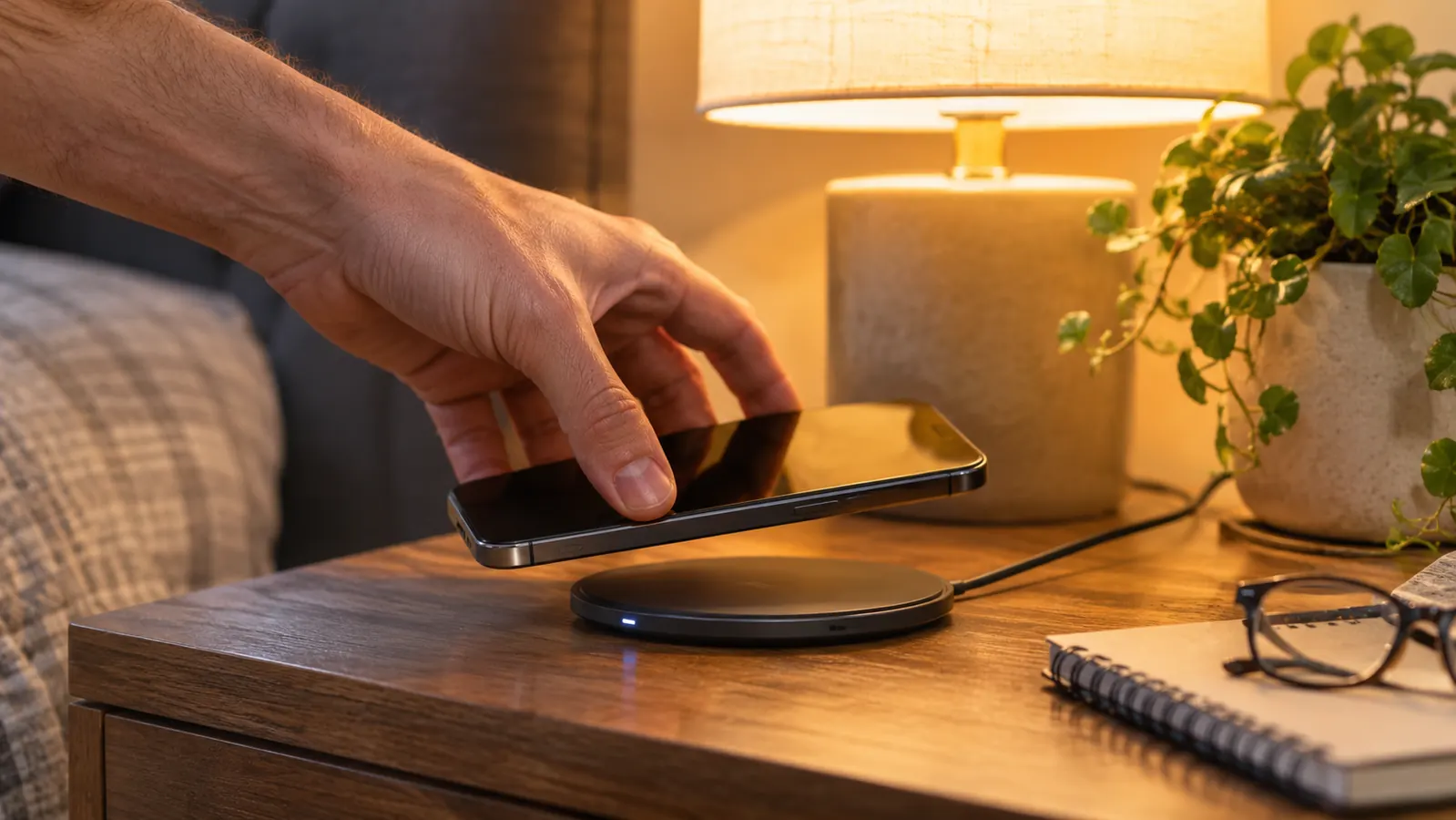
And here is the one people forget. This case supports wireless charging, so you never have to pry it off to set the phone on a charging pad. That reads like a small convenience. It is actually a protection feature. The cases that fail are the ones that come off twice a day, because eventually one of those days it does not go back on.
The habit part is not about being careful. It is about making the careful thing automatic, so you still do it on the days you are tired, distracted, or carrying groceries. Every phone I have seen break went down on a day somebody was in a hurry. Build the habit on the calm days and it will be there on the hurried ones.
What Else Helps
A case covers drops. It does not cover everything, and I would rather tell you that straight. This case is not water resistant, so it will not save a phone that goes into a sink or a puddle. If your phone lives near water, that is a separate problem with a separate answer, and no clear case is going to solve it for you.
A screen protector is the other half of the pair. The raised edge on this case gives you 1.9 mm of clearance over the glass, and a tempered glass protector adds another layer at almost no thickness. Together they cover the two spots that account for most of the repair bills I have seen in my life.
Keep the phone out of direct sun in the car. Heat is hard on batteries, and a phone left on a dashboard in July in Columbus will let you know about it. Then write the date down somewhere. This case carries a two year manufacturer warranty, and most people cannot remember when they bought anything. A note in the phone itself is the easiest place to keep it.
Finally, think about where the phone rides. A back pocket is where most of the cracked screens I have seen came from, because that is the pocket a chair seat and a car door both aim for. A front pocket or a bag keeps the phone out of that path. Small change, real difference over a couple of years.
The cheapest repair is the one you never needed
Mkeke's clear case for the iPhone 17 covers the corners, the camera and the screen edge without hiding the phone. Wireless charging friendly, two year manufacturer warranty, on in under a minute.
Amazon Check Today's Price on Amazon →