
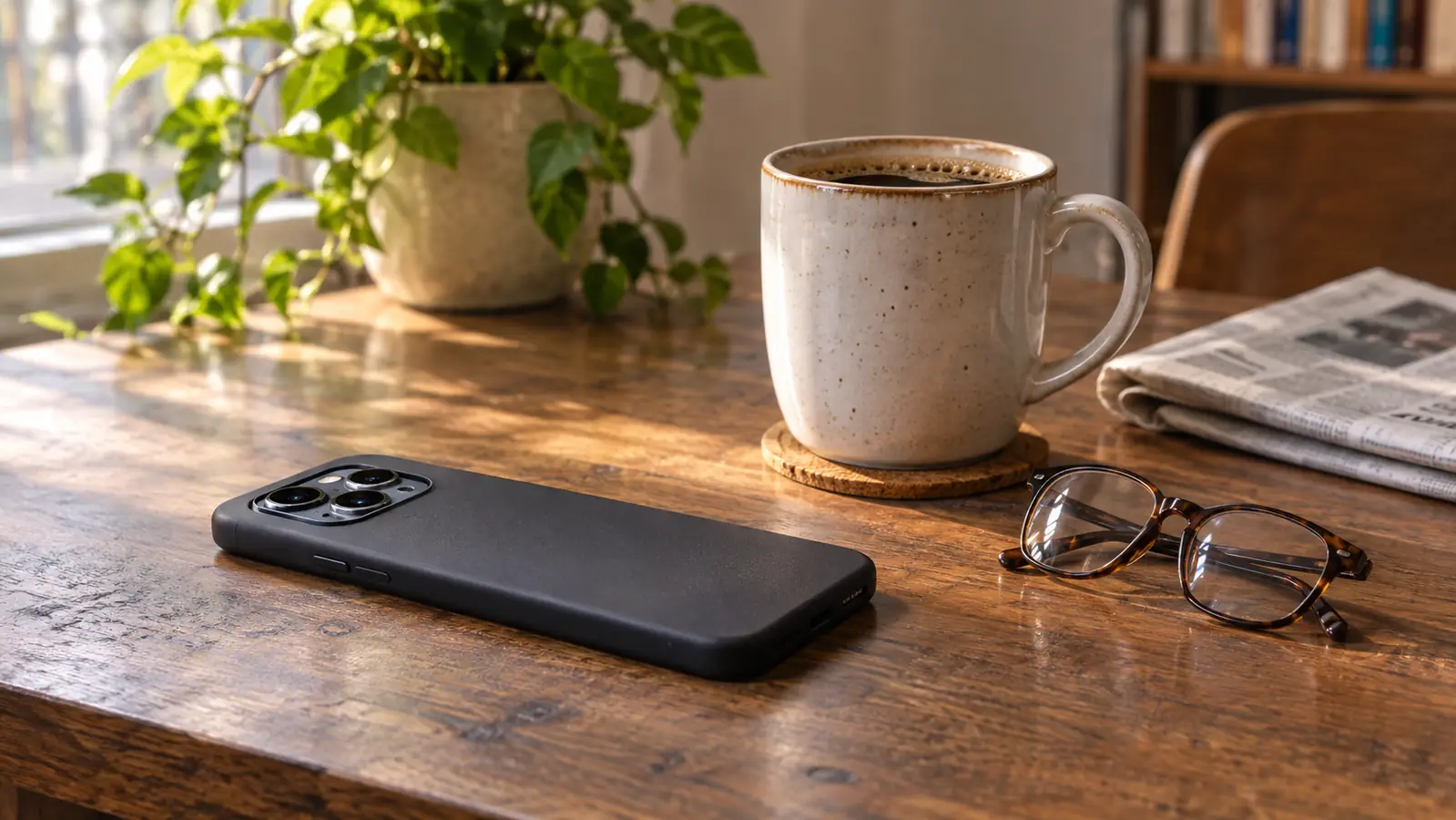
My phone lives in my front right pocket. That is the whole reason I care about a case. Two winters back I stepped out of the CR-V in the church parking lot, the phone slid off my leg and landed face down on the asphalt, and I spent the drive home listening to it ring through a spiderweb of cracked glass. Since then I have been particular about what goes on the phone, and I have handed more than one case back to the store because it turned the phone into a brick.
Here is the short version. The Mkeke iPhone 17 Clear Case is the one that stays on my phone. It is thin, the back is clear enough to read the Apple logo through, and it has done its job through a season of pocket life, a few knocks on the workbench, and one drop onto the garage floor I would rather not repeat. An OtterBox is the better case for a different person, someone who drops a phone the way the rest of us drop car keys. Different jobs, different cases.
Mkeke vs OtterBox at a Glance
| Mkeke Clear Case | OtterBox | |
|---|---|---|
| What it fits | iPhone 17 only, 6.3 inch, cutouts for every port, button and camera | OtterBox makes iPhone 17 cases across several model lines |
| Drop protection | Four shock-absorbing air guard corners, sold as military-grade drop protection | OtterBox built its reputation on drop testing and publishes its own standards |
| Thickness | Slim fit, 0.31 inch thick, slides into a shirt pocket without a fight | The rugged OtterBox lines are noticeably thicker and heavier in the hand |
| Clear back | Crystal clear back, sold as not-yellowing | Clear OtterBox models exist, but a clear back is not what the brand is known for |
| Raised edges | 3.9 mm around the camera, 1.9 mm around the screen | OtterBox raises its edges too, higher on the rugged models |
| Wireless charging | Supported per the listing, no need to take the case off | Supported on most OtterBox models, thick ones can slow it down |
| Grip | Smooth clear back, slick on a cold morning | Rubberized edges on the rugged lines hold onto your hand |
| Water | Not water resistant, and the listing says so plainly | OtterBox sells fully waterproof lines |
| Warranty | 2 year manufacturer warranty | OtterBox backs many of its cases with a limited lifetime warranty |
| Cost | The less expensive of the two by a wide margin | Costs more, and the rugged lines cost more again |
I should be plain about how I put that together. I own the Mkeke case and I have carried it daily. I do not own an OtterBox for this phone. The OtterBox column comes from the company's own published material and from twenty minutes with a neighbor's case on my own phone, which is enough to feel the difference in bulk and grip and not nearly enough to call it a test. I am a retired lineman, not a lab.
What the Mkeke Case Actually Is
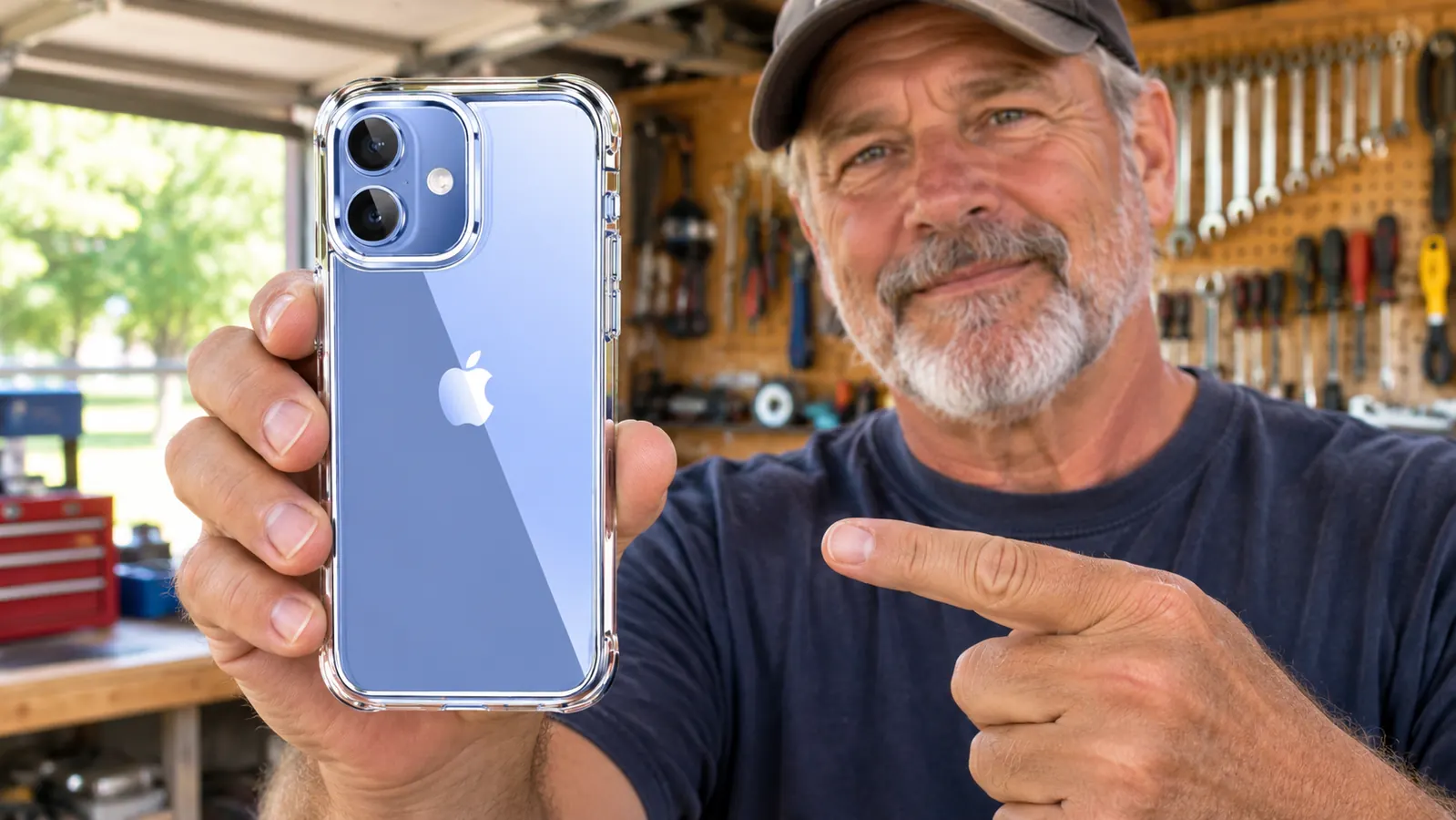
The listing is specific, which I appreciate. The Mkeke case is built for the iPhone 17 and nothing else, the 6.3 inch model, with cutouts that line up with every port, button and camera. It measures 5.89 by 2.81 by 0.31 inches. The back is clear, the pattern is solid, and the company sells it as not-yellowing.
The protection story is in the corners. Mkeke puts four large shock-absorbing air guard corners on it, which is the part that hits first when a phone goes down. Around the camera there is a 3.9 mm raised edge, and around the screen a 1.9 mm lip. That lip matters more than people think. Lay the phone face down on a counter and the glass never touches. Same on the camera side.
Two things it does not do. It is not water resistant, and the listing says so instead of pretending otherwise. And it is not a rugged case. There is no flap over the charging port, nothing that grabs your hand. What there is, is a thin shell with clear plastic and soft corners, and it supports wireless charging so you never have to pry it off to set the phone on a pad.
How They Feel in the Hand
An OtterBox announces itself. You feel the rubber edge before you see it, the case adds real width to the phone, and it sits in your palm like a tool. Some people want exactly that. My father carried a pocket knife that weighed more than his wallet, so I understand the appeal of a thing that feels substantial.
The Mkeke does not announce anything. It is 0.31 inches thick and the phone feels like the phone. The trade is grip. A smooth clear back on a dry hand is slick, and the first week I nearly launched the phone across the kitchen reaching for it on the counter. I adjusted. I keep a finger under the bottom edge now, the same way you carry a serving dish.
Buttons are the other difference. The covered buttons on this case press with a clean click and no mush. On thicker cases the button covers can get stiff enough that you have to squeeze, which matters if your hands are not what they were at forty. Mine are not.
Where Mkeke Wins
Thin is the first thing. My phone goes in a shirt pocket in the summer and a jacket pocket the rest of the year, and 0.31 inches does not catch on the fabric the way a rugged case does. I have carried bigger cases. You notice them every single time you sit down. I stopped noticing this one about a week in, which is the highest compliment I can pay a case.
Second is clarity, and third is cost. The back is clear enough that the phone still looks like the phone, and after several months I have not seen the yellowing that clear cases are famous for, which is the reason the company leads with that claim. On cost, the Mkeke is the less expensive of the two by a wide margin. If you replace a phone every few years and you are no longer climbing poles for a living, that difference buys something useful elsewhere.
After months of daily carry, the back is still clear enough to read the Apple logo through, and I have never once had to take the case off to charge the phone.
Where OtterBox Wins
Drop protection, and I am not going to pretend otherwise. OtterBox built its name on it and publishes its own testing standards, which Mkeke does not. If your phone hits concrete twice a month, that margin is worth paying for. The same goes for water. OtterBox sells fully waterproof lines. The Mkeke case is honest about not being one, but honest is not the same as dry.
Warranty and grip point the same direction. OtterBox backs many of its cases with a limited lifetime warranty. Mkeke offers a two year manufacturer warranty, which is decent and not the same thing. And the rubberized edges on the rugged OtterBox lines hold onto your hand in a way a smooth clear back simply does not. On a cold morning with dry skin, my case is slick. I have learned to keep a thumb under it.
If Thin and Clear Is What You Want, This Is the One I Carry
The Mkeke iPhone 17 Clear Case is on my phone right now. Slim enough for a shirt pocket, clear enough to show the phone, four air guard corners, raised edges at the camera and the screen, and it charges on a pad without coming off.
Amazon Check Today's Price on Amazon →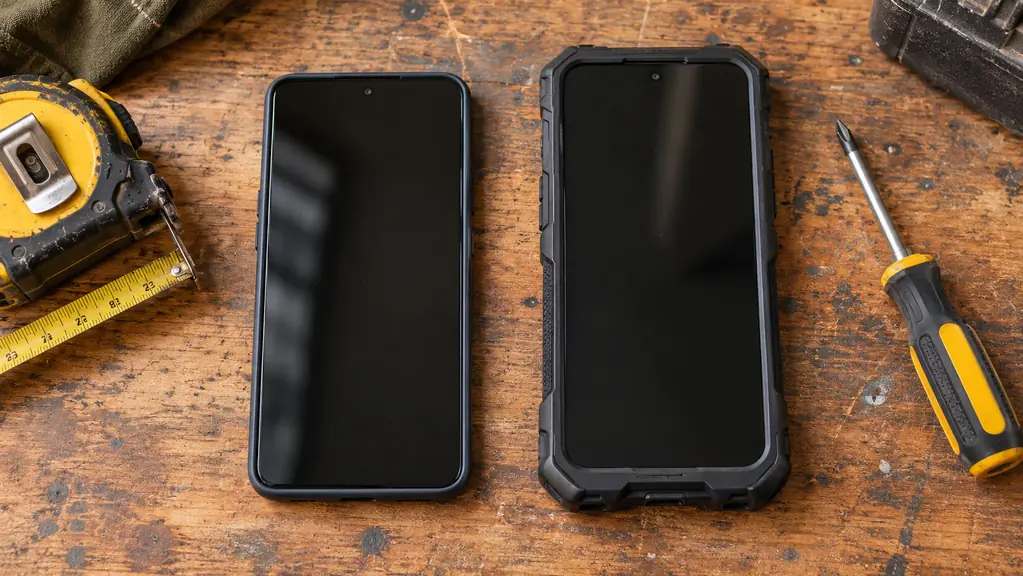
The Yellowing Question, Answered Plainly
Every clear case I owned before this one turned the color of weak tea within a year. That is not a knock on any one brand. Clear cases are made from soft plastics that react to sunlight and to the oils on your hands, and once that reaction starts you cannot wash it off. So when a company puts not-yellowing in the title, I read it the way I read a weather forecast.
Here is what I can report honestly. Several months in, with the phone in and out of a pocket all day and sitting on a dashboard more than it should, the back of my case is still clear. The edges have picked up a faint warm tint if I hold it against a white sheet of paper in direct sun, and I have to work to see it. That is better than any clear case I have owned, and it is not a promise that it will look new in three years. The two year warranty is the part that covers you if it goes badly.
What Daily Carry Did to It
Scratches, mostly. Clear plastic is soft, and a pocket with keys in it will leave fine lines on the back over time. Mine has them. They are visible at an angle and invisible when the screen is on. The corners have held up better than I expected. The one drop onto the garage floor landed on a back corner, and the air guard corner took it, with no mark on the phone and a small scuff on the case that I stopped seeing after a week.
Fit is still tight, which is the thing that fails first on cheap cases. No creaking when I squeeze it, no dust working in around the camera opening, and the buttons still click the way they did in week one. The cutouts are the correct size, which sounds like a low bar until you have owned a case where the charging cable only fits one way.
The Questions I Get Asked
Does it work with a screen protector? In my experience yes. The raised screen lip is 1.9 mm, so a normal glass protector does not fight the edge of the case. I have one on and nothing has lifted.
Will wireless charging work? Yes, and the listing says it supports it. I set the phone on the pad every night without taking the case off. That was the deal breaker on my last case, which was thick enough that the charger blinked at me and gave up.
Is it worth it over a case from a bin by the register? I have owned those. They crack at the corner within a month, the clear turns brown, and the cutouts are approximate. What you are paying for here is a case cut for the iPhone 17 exactly, with corners that absorb a drop and a clear back that stays clear longer than a season. If that is not worth it to you, you already know.
And the one Carol asks: will it protect the phone if I drop it? It protected mine on a garage floor. I am not going to promise it will protect yours off a ladder. That is the honest answer, and it is the reason the OtterBox exists.
Who Should Buy Which
Buy the Mkeke if the phone lives in your pocket, if you want to see the phone you paid for, if you charge on a pad at night, and if you are mostly indoors. Buy it if you are watching the budget and would rather spend the difference on something else. It is also the right pick if your hands are not as strong as they used to be, which is a real consideration at my age. Thin cases come off. Rugged ones fight you.
Buy the OtterBox if the phone goes where the work is. Jobsite, boat, hiking trail, a grandkid's hands on a Saturday afternoon. Buy it if you have dropped a phone in the last year, or if you want a warranty that outlives the phone. And buy it if you would rather carry a brick and never think about it again, because that is a perfectly reasonable way to live.
The Case That Has Stayed on My Phone
Slim, clear, and quiet about it. Four shock-absorbing corners, a raised camera edge, a raised screen lip, and wireless charging that works with the case on. If that is the case you have been looking for, here it is.
Amazon Check Today's Price on Amazon →