
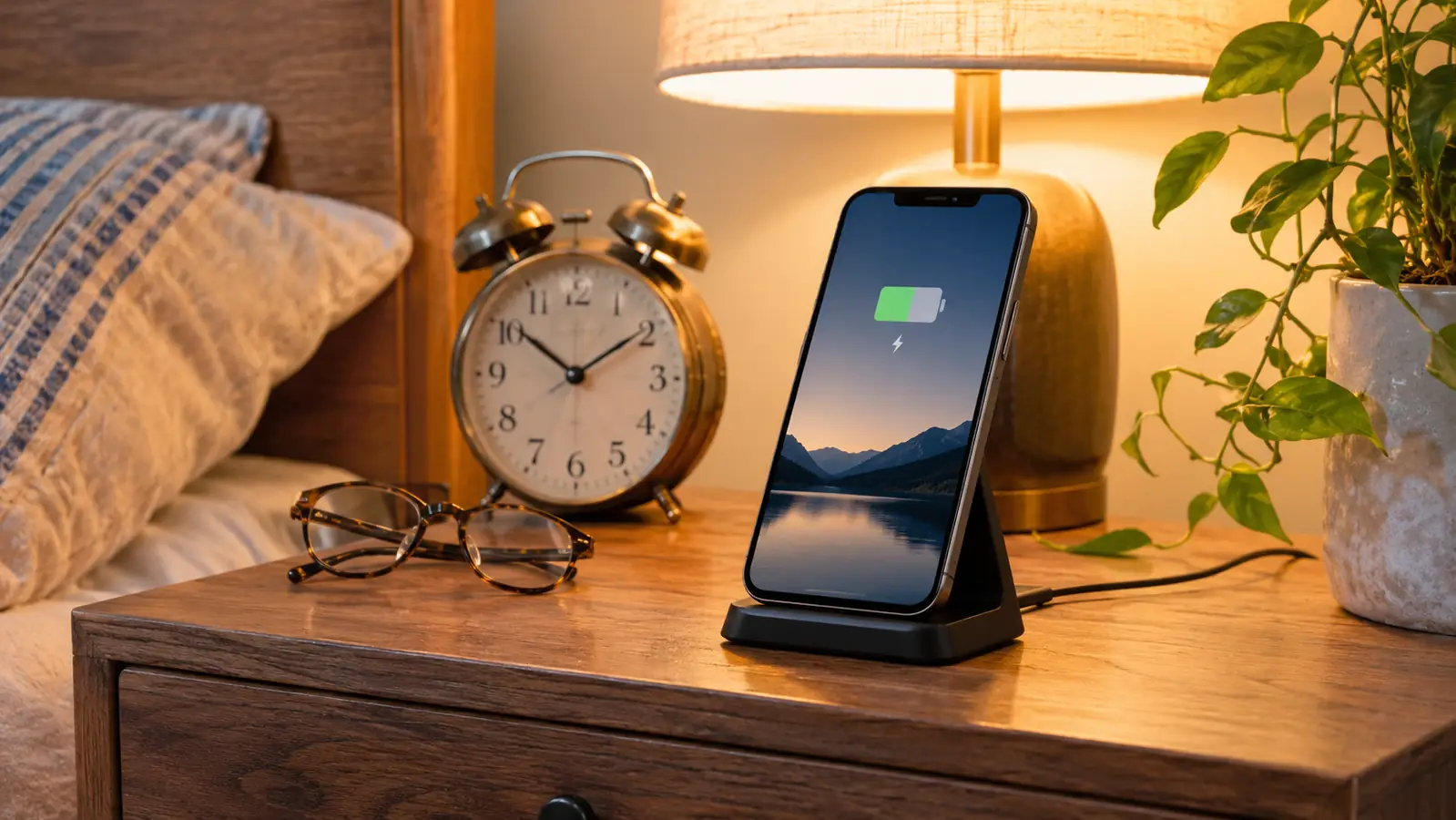
Short answer first, because that is what you came for. If your phone spends its evening on a nightstand and you want to set it down without hunting for the end of a cable in the dark, the Anker 313 Wireless Charger Stand earns its spot. If you want the most charge in the least time, or your phone lives inside a thick case, a plain charging cable still wins, and it is not close. Neither statement cancels the other out. Any review that tells you one side takes every single category is selling you something besides a charger.
I am Glen Hartwell. I spent thirty-one years climbing poles and splicing lines for the phone company here in Columbus, and I am the fellow my family hands their devices to when something stops working. I have had the Anker 313 sitting on my own nightstand for several weeks now, and I have run it against the cable I used before it, on the same phone, on the same nights. What follows is the split I actually found, not the split the box wants me to find.
| Anker 313 Stand | A plain charging cable | |
|---|---|---|
| Charging speed on an iPhone | 7.5 watts, up to 10 watts on a Samsung Galaxy, and only with a 9V / 2A adapter you supply | Full speed with a fast-charge adapter, every time |
| Thick or heavy cases | Charges through cases up to 2.5 mm thick in plastic, rubber or TPU | Case thickness does not matter at all |
| Using the phone while it charges | You can read the screen, but the phone stays parked | Take the call into the kitchen with you |
| Hunting for the cable at night | Set the phone down on the stand and walk away | Find the end, aim for a small port, hope |
| Wear on the charging port | Nothing plugs into the phone, ever | In and out two or three times a day |
| Watching video or using Face ID | Holds the phone upright, and sideways for video | Phone lies flat or you hold it up |
| Any phone in the house | Qi-certified phones only | Anything with the matching port |
| What comes in the box | Stand, 3 ft Micro-USB cable, 18-month warranty | Whatever is on the shelf, nothing extra |
A word on reading that table. I did not give the cable a few rows out of politeness. I gave it those rows because they are true, and because the differences matter more the older your hands and eyes get. A man with neuropathy in his fingertips is going to feel the difference between setting a phone down and pushing a tiny connector into a tiny hole. He is also going to notice when his phone is not charged because the case was too thick for the coil.
Where Anker 313 Wins
The stand wins on the last ten minutes of the day. That is the whole thing, really. A cable requires you to find the end of it, hold the phone steady, and push it into a port that has gotten smaller with every model year. At ten at night, with the lamp off and your glasses already on the table, that is a small chore that feels like a large one. The Anker 313 asks you to do one thing. Set the phone down on it. That is the entire procedure, and after a week your hand learns the spot without your eyes being involved.
It also wins on the charging port, and this is the part people do not think about until the port fails. Every time you plug a cable in and pull it back out, you put wear on the connector at the bottom of the phone. Two or three times a day for a few years adds up to a lot of in and out. The stand never touches that port. Beyond that, the phone sits upright while it charges, so you can read the screen from the pillow, and Face ID unlocks it without you picking it up. Turn the phone sideways and the stand holds it for video. A cable does none of that.
Where a Plain Cable Wins
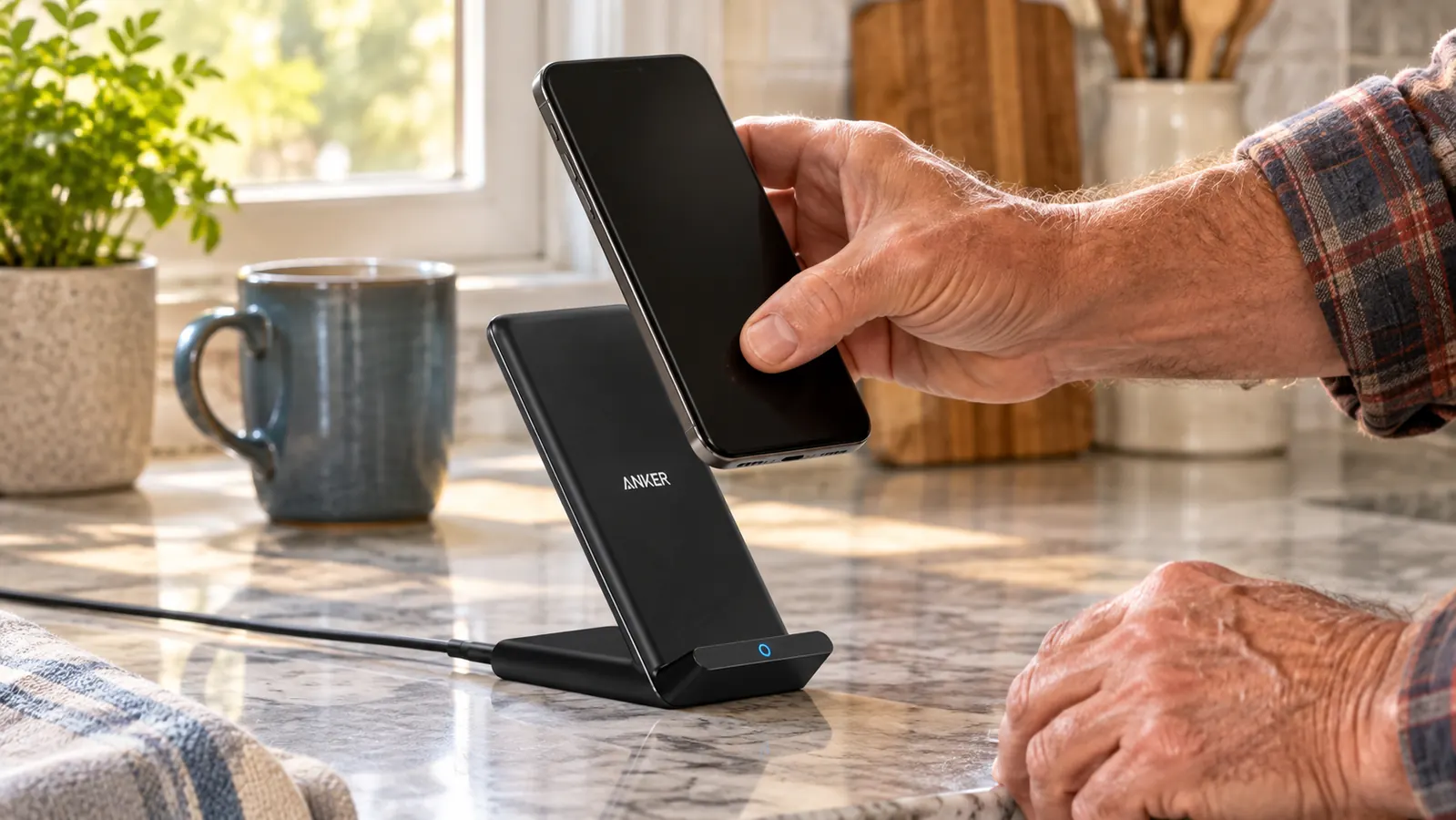
Now the other side, because the cable wins more than people admit. Speed, first. The Anker 313 delivers 7.5 watts to an iPhone and up to 10 watts to a Samsung Galaxy, and it needs a 9V / 2A adapter that is not included in the box. A cable paired with a fast-charge adapter will put more power in during the same half hour. If your phone charges overnight while you sleep, this does not matter one bit. If you charge for twenty minutes before you leave the house, it matters a great deal, and pretending otherwise would be dishonest of me.
The cable also wins on cases and on movement. The stand charges through cases up to 2.5 mm thick, made of plastic, rubber or TPU. A thick wallet case, or anything with metal in it, will interrupt the charge, and you will not always get a clear warning about why the phone is sitting there at forty percent. A cable does not care what the phone is wearing. A cable also lets you keep using the phone while it fills up and carry it into the kitchen mid-call. On the stand, the phone is parked until you pick it up. That is the trade, plain and simple.
Set It Down, Walk Away, Wake Up Charged
The Anker 313 stand comes with a 3 ft Micro-USB cable and an 18-month warranty. You supply the 9V / 2A wall adapter. Today's price is on the listing.
Amazon Check Today's Price on Amazon →What the Numbers on the Box Actually Mean
The wattage numbers need a plain translation, because they mislead people in both directions. Seven and a half watts is the iPhone figure. Ten watts is the Samsung Galaxy figure. Both of those are ceilings, not promises, and both depend on what you plug into the wall. Anker specifies a 9V / 2A adapter, and the adapter is not in the box. If you feed the stand from an old 5V phone brick you have had since the Obama administration, you will get a slower charge and you will blame the stand. Buy the right adapter once and the argument goes away.
The 2.5 mm case figure is the other one worth understanding. Two and a half millimeters is roughly the thickness of a standard thin phone case, the kind you buy to stop scratches. It is not a thick protective case, and it is definitely not a wallet case with cards in it. Qi certification, which this stand carries, means the stand meets the wireless charging standard and will behave predictably with phones built to that same standard. It does not mean it will push power through anything you wrap around the phone.
The rest of the listing is ordinary but useful. The stand weighs 3.84 ounces, so it is light enough that a stiff breeze will not knock it over but heavy enough to stay put when you set a phone on it. It ships with a 3 ft Micro-USB cable and an 18-month warranty. Three feet is short. I want to be clear about that. If your outlet is behind the bed rather than at the nightstand, you will be buying a longer cable or an extension, and you should know that before the box arrives rather than after.
The stand does not charge the phone faster. It makes the last ten minutes of the day easier, and it turns out that was the part I actually cared about.
What It Is Like to Live With
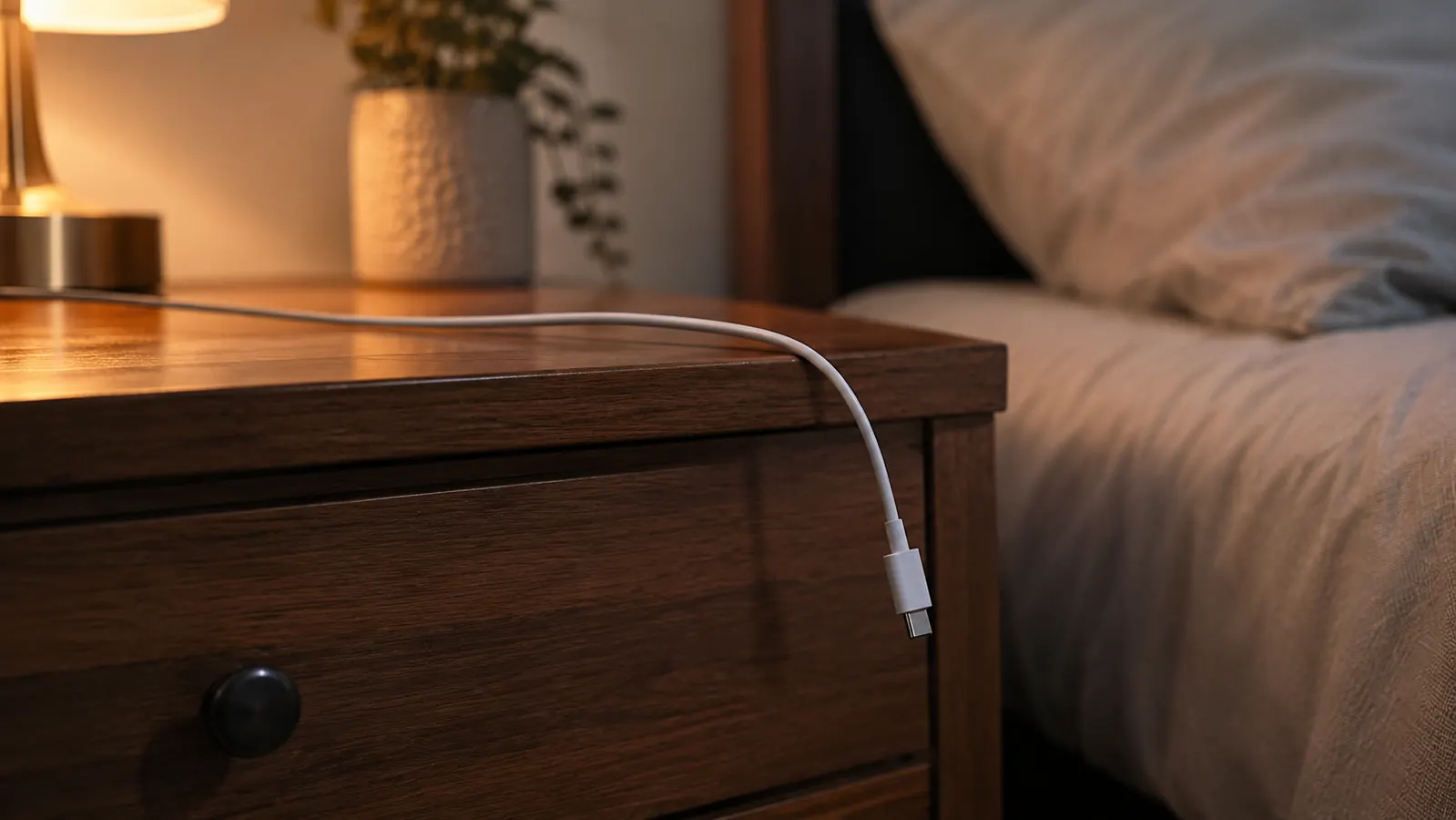
Setup took me about two minutes, most of which was getting down behind the nightstand to reach the outlet. I ran the 3 ft cable from the stand to the brick, plugged the brick in, and set the stand where the old cable used to live. The top of my nightstand has been clear ever since. No cable draped across it, no end sliding down behind the bed at night, no feeling around on the floor at six in the morning. If you have ever spent five minutes on your knees looking for a charging cable, you already understand the value here.
The routine settles in fast. My grandchildren visit on weekends and treat the iPad as their personal property, and they have learned that the stand is where a phone goes when it is handed back to me. Carol puts her phone on it when she sits down to read. I put mine on it when I turn in, and in the morning it is full. That is the whole relationship. Nothing about it is exciting, which is exactly what I want from a piece of hardware on a nightstand at my age.
The one adjustment is aim. The phone has to sit centered on the stand or the coil misses and the charge does not start. You learn the feel of it in a few nights, and the stand holds the phone at an angle that makes the right position obvious. If you drop it on crooked in the dark and walk away, you may come back to a phone that gained nothing. That happened to me twice in the first week and has not happened since.
The Case Question, and Other Small Annoyances
The case rule is the annoyance I would flag hardest if we were talking at my kitchen table. Two and a half millimeters is not much. If your phone wears a heavy protective case, or a case with a magnetic plate glued inside it for a car mount, the Anker 313 will either refuse to charge or charge slowly enough that you will think it is broken. Take the case off and try it before you decide the stand is faulty. That single step solves most of the complaints I have read about this kind of charger.
Two other things. The phone comes off the stand a little warm to the touch, which has been normal in my experience with wireless charging and has caused me no trouble. And the stand needs that 9V / 2A adapter, which is a separate purchase most people do not notice until they open the box. Neither of these is a reason to skip it. Both are reasons to know what you are buying. A charger that surprises you on night one is a charger you stop trusting.
Who Should Buy Which
Buy the Anker 313 stand if your phone sleeps on a nightstand, if you charge it overnight, and if you are tired of fishing for a cable in the dark. Buy it if the charging port on your phone has already given you grief once, because the stand will never touch that port again. Buy it if you like watching something on the phone in bed and want it held up at a readable angle rather than propped on a pillow. It is a good fit for a household where phones come home and stay put until morning, and it is a good fit for hands that would rather not fiddle with a tiny connector at midnight.
Skip it, or buy a cable instead, if you need a fast top-up before you walk out the door, if your phone wears a thick case you are not willing to remove, or if you use the phone while it charges and carry it from room to room. A cable and a fast-charge adapter cost less and do that job better. The honest answer is that many households should have both: the stand on the nightstand for the overnight charge, and a cable in the kitchen drawer for the twenty minutes before you leave. That is what I ended up with, and I stopped thinking about charging altogether, which was the point.
If Your Nightstand Is Still a Tangle of Cable, Fix That Tonight
The Anker 313 holds the phone upright for Face ID and video, charges through cases up to 2.5 mm thick, and comes with an 18-month warranty. Pair it with a 9V / 2A adapter and the overnight charge takes care of itself.
Amazon Check Today's Price on Amazon →